Irgendwann muss es ja jemand sagen. Die nackte und ungeschulte Wahrheit über Change Management. Denn aus mit nicht ganz nachvollziehbaren Gründen glauben viele Manager nach wie vor, dass Change Management die “Wohlfühlpartie” sei. Dass es darum ginge, die Veränderung sanft zu begleiten, “alle immer und überall mitzunehmen” in einer Form,
Why I am done with transformation
For the longest time of my professional life I have been working, researching and thinking in terms of transformation – my highest intention was to help organizations – or social system – transform. Transformation in the sense that something already has taken on a mental and structural
Dies ist mein erster VLOG zum Thema: was kommt nach agil? Wie sieht die Zukunft von Organisationen aus.
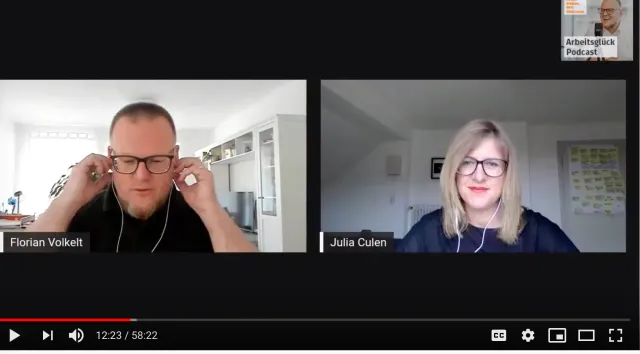
Aufgenommen wurde er vor 2 Tagen in einem online Gespräch mit Florian Volkelt, Experte für Arbeitsglück.
Es war inhaltlich sehr dicht, auch aufgrund der hohen Interaktivität mit den live-Gästen, es wurde
If we look at our key burning questions like climate change, inequality with all its consequences like wars and poverty and the soaring number of mental suffering one could get hopeless and desperate. How on earth are we going to solve these problems? I would suggest to look deeper at
Wir alle kennen diese Situationen, die – letzten Endes – alles verderben. Auch wenn es bis dahin – vermeintlich – gut war. Und umgekehrt kann ein gutes Ende alles Schwierige, was davor war, viel positiver und wertvoller erscheinen lassen: Ende gut – alles gut.
Die schlechte Gegenwart verändert die Vergangenheit oft schlagartig, dazu möchte ich
What if Culture was a deliberate strategic choice and not a some higher mythical power? And what if Culture was not eating Strategy for breakfast but if the 2 were co-arising as result of a clear intention?
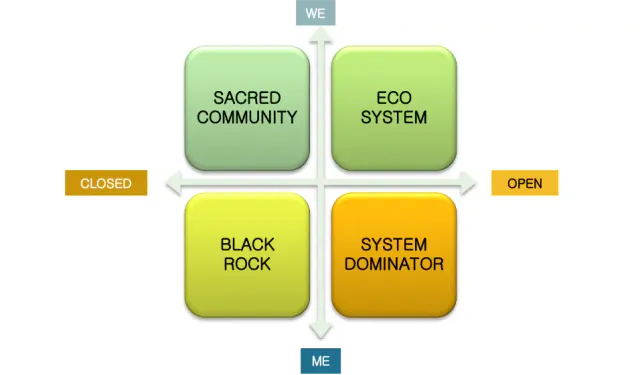
For the sake of facilitating the opaque culture discussion for my clients,
Warum gibt es noch immer Unternehmen, die ihr Geschäft in klassischen funktionalen Strukturen und Machthierarchien betreiben, so als wären wir noch in den 1970er Jahren? Unternehmen die weiterhin Berater beschäftigen um lineare Kostensenkungsprogramme durchzuführen wie in den 1980er Jahren? Ich habe dafür nur eine Erklärung: diese Unternehmen sind in Resonanz
Langsam wird es wirklich eng für Organisationen, die noch nach traditionellen, funktionalen und hierarchischen Prinzipien organisiert sind. Es kracht an allen Ecken und Kanten: konnte man sich bisher noch mit Optimierungsmaßnahmen im Alten durchwurschteln, sind nun die Grenzen hierfür erreicht. Der Veränderungsdruck steigt und die nicht mal subtile Botschaft ist
At a time of intense competition and rapid change in almost all relevant framework conditions, a rethinking of organizational forms and structures is indispensable. Many companies can no longer meet the demands placed on them with well-known methods and as lone fighters. In this article I show how the
https://www.druckerforum.org/blog/?p=2244
This article is one in the Drucker Forum “shape the debate” series relating to the 11th Global Peter Drucker Forum, under the theme “The Power of Ecosystems”, taking place on November 21-22, 2019 in Vienna, Austria #GPDF19 #ecosystems
One of the key
German Version
Myths of self-organization
Self-organization is currently seen as the most promising means for businesses to prepare for the challenges of digitization and disruptive change. However, success is threatened by misconceptions and exaggerated expectations. The ten biggest misconceptions.
These are serious problems that many traditional organizations have
Summary
When Leaders create a Vision they struggle because they think they need to describe what the organizations should look like in 5-10 years from now. Of course they can’t because the future is unpredictable. I would like to suggest a different approach to a Vision, that is